Navigating the Immersive Technologies Landscape
In the dynamic realm of immersive technologies, Virtual Reality (VR) and Augmented Reality (AR) have emerged as transformative forces shaping various industries. Understanding the distinctions and applications of these technologies is crucial for businesses and consumers aiming to leverage their potential effectively. This blog delves into the fundamental differences between VR and AR, explores their diverse applications, and provides guidance on selecting the right technology to meet your specific needs.
Understanding Virtual Reality and Augmented Reality
Defining Virtual Reality (VR)
Virtual Reality envelops users in entirely fabricated environments, severing ties with the physical world. This is achieved through sophisticated headsets and sensory apparatus that generate immersive simulations, ranging from interactive gaming realms to intricate training modules. VR's capacity to create a sense of presence allows individuals to experience scenarios that would be otherwise inaccessible, providing a profound level of engagement and interaction. Whether traversing alien landscapes or participating in high-stakes simulations, VR offers a gateway to experiences limited only by imagination.
Defining Augmented Reality (AR)
Augmented Reality seamlessly integrates digital overlays within the user's tangible environment, enhancing the perception of reality without displacing it. Accessible through smartphones, tablets, or specialized AR glasses, this technology enriches the physical world with interactive digital elements such as informational graphics, virtual objects, and real-time data. AR's strength lies in its ability to provide contextual information and augment everyday activities, bridging the gap between the digital and physical realms. This harmonious blend fosters enhanced interaction and productivity, making AR a versatile tool across various applications.
Core Differences Between VR and AR
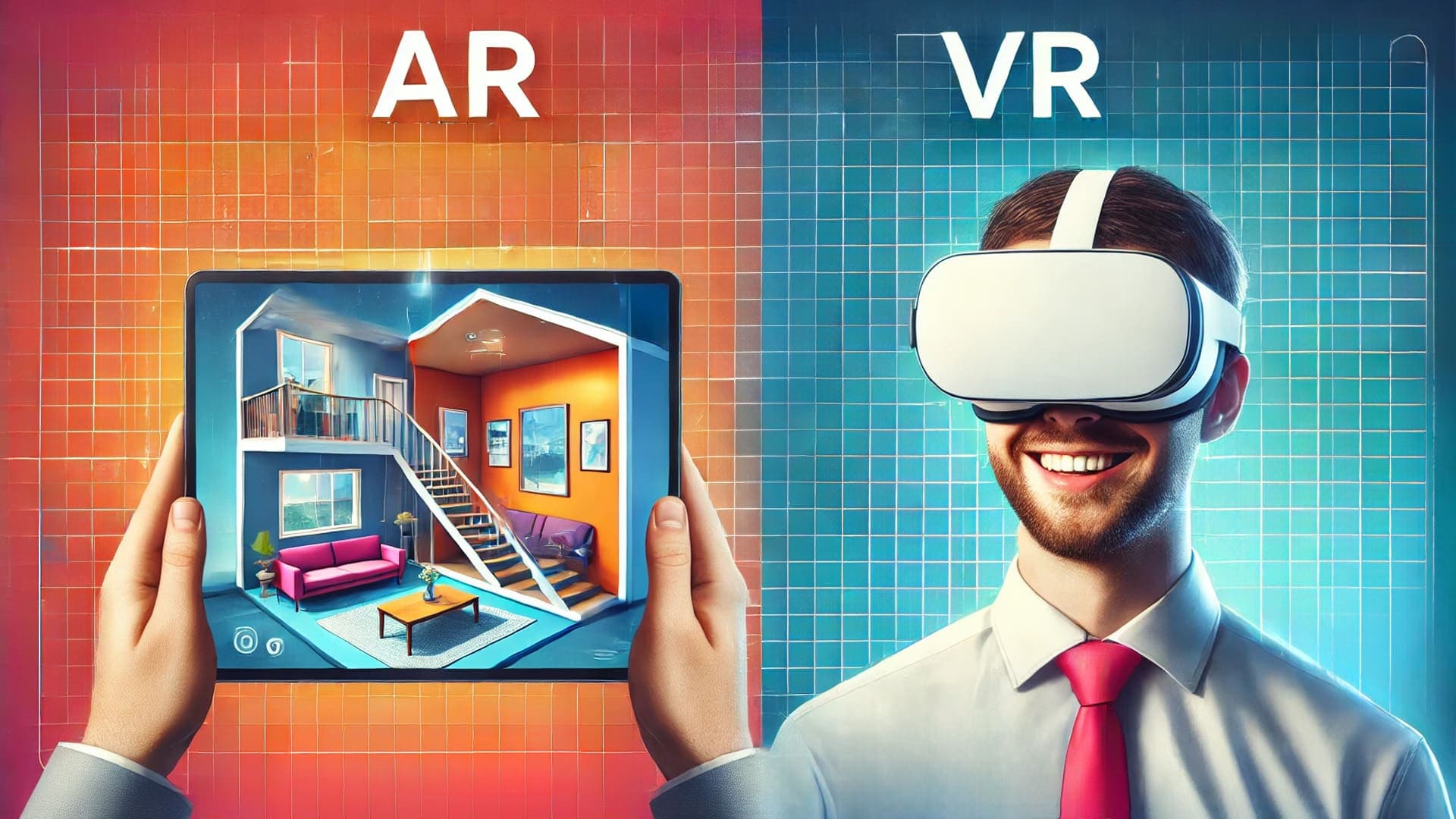
The quintessential distinction between VR and AR resides in their interaction with the real world. VR necessitates dedicated hardware to immerse users in a wholly digital space, effectively isolating them from their surroundings. In contrast, AR operates by superimposing digital content onto the existing environment, requiring more ubiquitous devices like smartphones or AR glasses. Additionally, the development paradigms for VR and AR diverge significantly; VR demands intricate environmental simulations and robust performance capabilities, while AR focuses on real-time data integration and context-aware interactions. These foundational differences dictate their respective applications and user experiences, tailoring each technology to specific needs and industries.

Applications of VR and AR Across Industries
VR in Gaming and Entertainment
Virtual Reality has fundamentally transformed the gaming and entertainment sectors by offering unparalleled immersion and interactivity. Gamers can now transcend traditional boundaries, stepping into meticulously crafted virtual worlds that respond dynamically to their actions. This level of immersion enhances the emotional and psychological engagement, making experiences more compelling and memorable. Beyond gaming, VR extends to virtual concerts, interactive storytelling, and cinematic experiences, where users can explore narratives from unique perspectives. The entertainment industry's embrace of VR signifies a paradigm shift towards more interactive and experiential forms of media consumption.
AR in Retail and E-commerce
Augmented Reality is revolutionizing the retail and e-commerce landscape by providing consumers with interactive and personalized shopping experiences. AR applications enable customers to visualize products in their own spaces before making a purchase, reducing uncertainty and enhancing satisfaction. For instance, virtual try-ons allow users to see how clothing items fit without physically wearing them, while furniture retailers offer virtual placement features to ensure products complement existing home decor. Additionally, AR-driven promotional campaigns and interactive advertisements engage consumers in novel ways, fostering deeper connections and driving sales. This technological integration not only elevates the shopping experience but also provides retailers with valuable insights into consumer behavior.
VR and AR in Education and Training
Both VR and AR are potent tools in the realm of education and professional training, offering immersive and interactive learning environments. VR facilitates the creation of controlled simulations where learners can practice complex skills without real-world risks, such as surgical procedures or flight operations. This hands-on approach enhances comprehension and retention, making training more effective and engaging. Conversely, AR enriches traditional educational settings by overlaying interactive information onto physical objects, aiding in the visualization of abstract concepts and fostering interactive learning. From virtual classrooms to augmented field trips, these technologies provide diverse methodologies that cater to various learning styles and objectives, revolutionizing the educational landscape.
Benefits and Challenges of VR and AR
Advantages of Virtual Reality
Virtual Reality's hallmark is its ability to provide complete immersion, making it ideal for applications that demand total focus and interaction within a digital environment. This profound level of engagement is particularly beneficial in fields such as training and simulation, where users can experience lifelike scenarios that enhance skill acquisition and decision-making. VR also excels in creating compelling entertainment experiences, allowing users to explore intricate virtual worlds and narratives. Furthermore, the sense of presence achieved through VR fosters emotional connections and empathy, making it a powerful tool for storytelling and experiential marketing. These advantages underscore VR's potential to transform various industries by offering deeply engaging and interactive experiences.
Advantages of Augmented Reality
Augmented Reality enhances the real world by integrating valuable digital information, offering a versatile tool for everyday applications. Its ability to provide contextual and interactive overlays without disrupting the user's perception of their environment makes AR highly adaptable across diverse sectors. In healthcare, AR aids surgeons by overlaying critical information during procedures, enhancing precision and outcomes. In navigation, AR delivers real-time directions and contextual data directly onto the user's field of view, improving efficiency and user experience. Additionally, AR facilitates collaborative work by enabling remote assistance and real-time data sharing, thereby enhancing productivity and connectivity. These multifaceted advantages highlight AR's capability to augment human experiences and streamline various processes.
Common Challenges and Limitations
Despite their transformative potential, both VR and AR encounter significant challenges and limitations. VR requires substantial investment in specialized hardware and sophisticated software, which can be cost-prohibitive for some users and organizations. Additionally, prolonged VR use may induce motion sickness and fatigue, detracting from the user experience. AR, while more accessible, often grapples with issues related to seamless integration and stability of digital overlays in dynamic environments. The reliance on precise hardware calibration and environmental factors can hinder the consistency and reliability of AR experiences. Moreover, both technologies demand advanced technical expertise for development and maintenance, posing barriers to widespread adoption. Addressing these challenges is crucial for the continued evolution and integration of VR and AR technologies.

Choosing Between VR and AR: Factors to Consider
Identifying Your Objectives and Use Cases
When deliberating between VR and AR, it is imperative to delineate your specific objectives and use cases. Assess the primary purpose of the technology—whether it is to create immersive training environments, enhance customer engagement, or provide interactive educational content. Understanding the intended application will guide the selection of the most suitable technology. For instance, if the goal is to simulate complex training scenarios, VR may be the optimal choice due to its immersive capabilities. Conversely, if the objective is to augment real-world tasks with digital information, AR would be more appropriate. Clarifying these objectives ensures that the chosen technology aligns with your strategic goals and delivers the desired outcomes.
Evaluating Budget and Resource Availability
Financial considerations play a pivotal role in the decision-making process between VR and AR. VR implementations typically entail higher upfront costs due to the need for specialized hardware, such as high-resolution headsets and powerful computing systems. Additionally, the development of VR content often requires more extensive resources and expertise. In contrast, AR can be deployed with existing devices like smartphones and tablets, making it a more cost-effective option for many applications. Evaluating your budget and resource availability will help determine the feasibility of each technology and ensure that your investment aligns with your financial constraints and project requirements.
Assessing Technological Readiness and Compatibility
Technological readiness and compatibility are critical factors to consider when choosing between VR and AR. Assess whether your existing infrastructure can support the integration of VR or AR technologies. This includes evaluating hardware capabilities, software compatibility, and the technical expertise required for development and maintenance. For VR, ensure that your systems can handle the high processing demands and that users have access to the necessary hardware. For AR, consider the compatibility of your devices with AR applications and the stability of digital overlays in various environments. Additionally, evaluate the scalability of the technology to accommodate future growth and advancements, ensuring that your investment remains viable in the long term.