
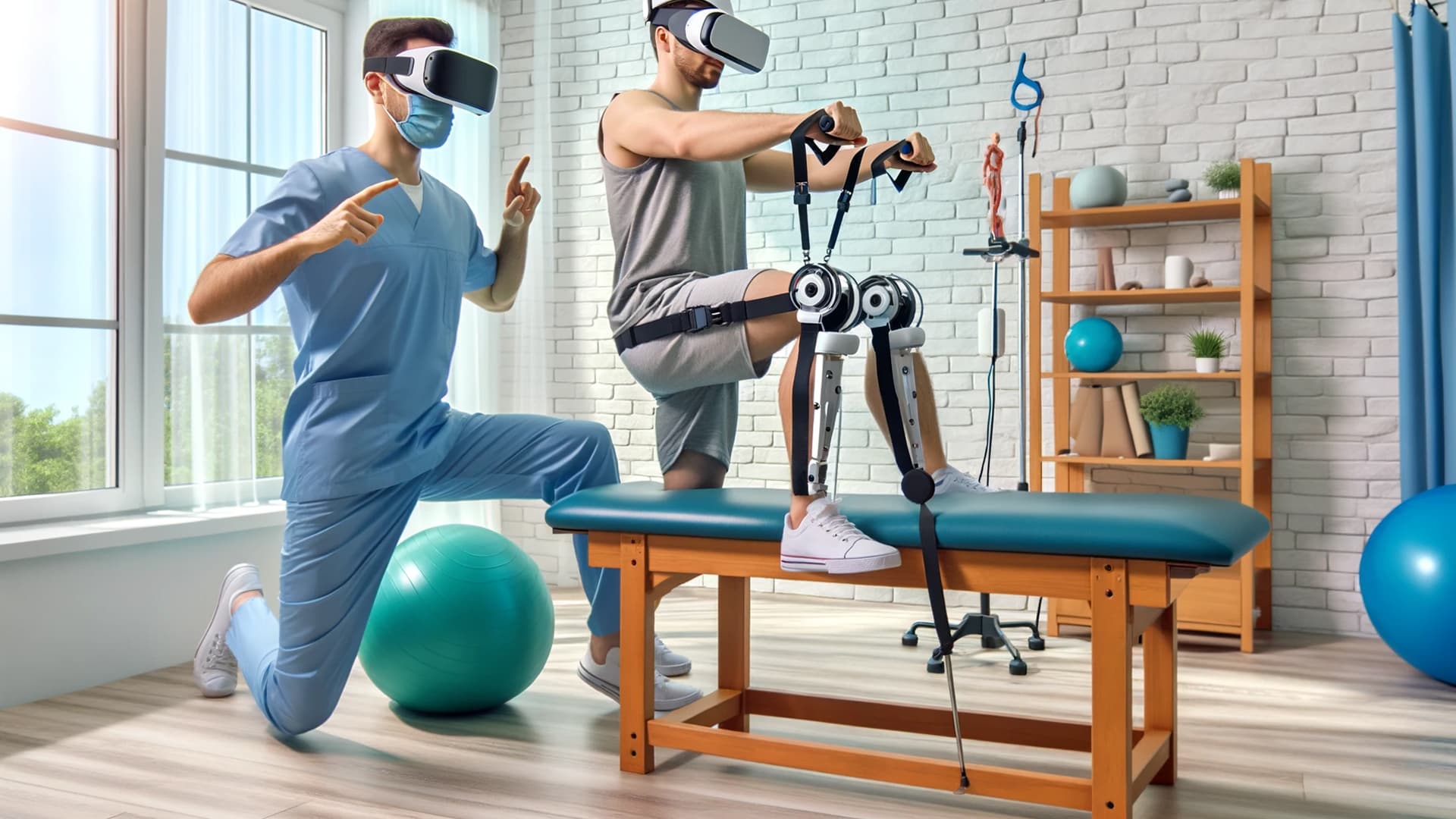
In the dynamic world of healthcare, where technological advancements continuously redefine the boundaries of what’s possible, Virtual Reality (VR) emerges as a beacon of innovation. This article delves into the fascinating applications of VR in the medical field, illustrating how this immersive technology is not just shaping the future of patient care but also enhancing the skills of medical professionals.
Unveiling New Dimensions in Healthcare
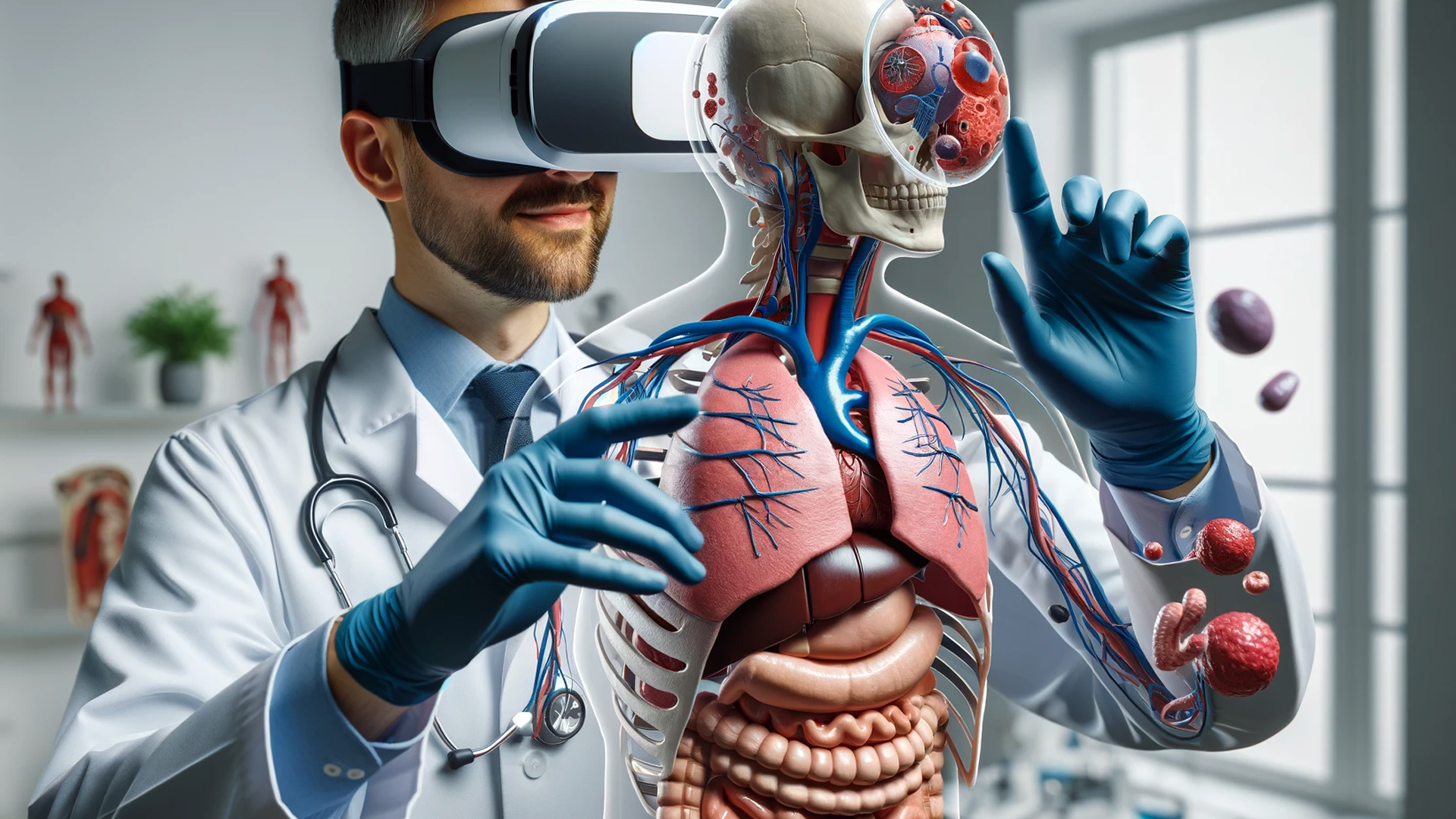
The integration of Virtual Reality into medicine represents a paradigm shift, offering a spectrum of revolutionary applications that extend from medical education to patient treatment and rehabilitation. By creating a simulated reality, VR allows healthcare professionals to experience and interact with the human body in ways previously confined to the imagination.
Transformative Learning and Training
One of the most impactful applications of VR in medicine is in the realm of education and training. Medical students and professionals can now immerse themselves in highly detailed, interactive 3D models of human anatomy. This hands-on approach facilitates a deeper understanding of complex physiological structures and diseases, far beyond what textbooks or traditional 2D imaging techniques can offer.
Moreover, VR simulations enable aspiring surgeons to practice procedures in a risk-free environment. These virtual operating rooms come equipped with realistic scenarios, from routine surgeries to high-stakes emergency situations, allowing practitioners to hone their skills and decision-making abilities without the ethical and logistical constraints of using real patients.
Enhancing Patient Care and Treatment
In the treatment domain, VR has opened new avenues for pain management, psychological therapy, and physical rehabilitation. By immersing patients in carefully designed virtual environments, medical professionals can significantly reduce the perception of pain during procedures or in recovery phases. For instance, VR experiences that transport patients to serene landscapes have been shown to alleviate discomfort and anxiety during treatments like chemotherapy or wound care.
Furthermore, VR’s potential in treating psychological conditions, such as PTSD, anxiety disorders, and phobias, is being explored with promising results. Customized virtual scenarios provide a safe space for patients to confront and work through their fears under the guidance of a therapist, facilitating a form of exposure therapy that is controlled and measurable.
Revolutionizing Rehabilitation
Physical rehabilitation through VR is another area where the technology shines, offering engaging and interactive exercises that can be tailored to each patient’s specific needs. Stroke survivors, for example, can benefit from virtual reality games and scenarios that encourage movement and coordination, turning the often-tedious process of rehabilitation into a more motivating and enjoyable experience.
The Future is Now
The possibilities for VR in medicine are vast and constantly evolving. As technology advances, so too does the realism and effectiveness of these virtual solutions. The future may hold even more sophisticated applications, such as real-time remote surgeries conducted through VR or augmented reality (AR), where surgeons could operate with unparalleled precision by overlaying digital information onto the physical world.
Embracing Virtual Realities in Medicine
For medical professionals keen on staying at the forefront of technological innovation, embracing VR offers a unique opportunity to enhance their practice, improve patient outcomes, and revolutionize the way medical education is delivered. As we continue to explore the potential of VR in healthcare, it’s clear that the technology is not just an adjunct to traditional methods but a transformative tool that redefines the limits of medicine.
In conclusion, Virtual Reality stands as a testament to the incredible advancements in medical technology, offering a glimpse into a future where the lines between the digital and physical worlds blur in the service of health and healing. For medical professionals exploring the integration of VR into their practice, the journey promises to be as rewarding as it is revolutionary, heralding a new era of medical care that is immersive, interactive, and immensely impactful.
Related Vectors
Full HubMore From Virtual Reality

Adaptive VR Training: Using Physiological Feedback to Improve Learning & Safety
Revolutionize training with adaptive VR—utilizing heart rate, gaze, and stress indicators to personalize learning and enhance safety.

Civilization VII in VR for Meta Quest 3: Release Date, Pricing, and What to Expect
Explore Civilization VII in VR—launching April 10, 2025, for $60. Experience the strategy classic in immersive mixed reality.
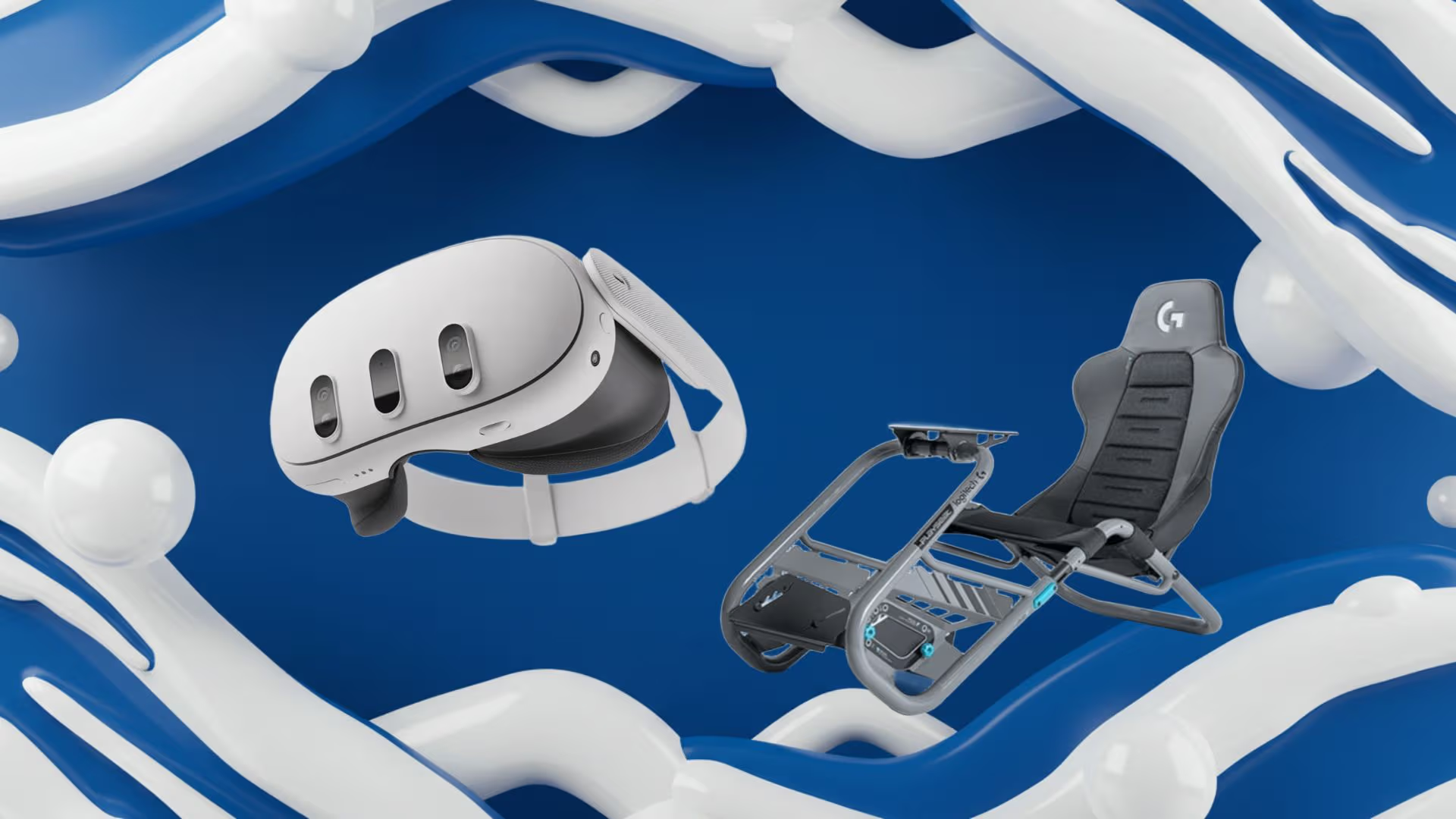
Optimizing Your Meta Quest 3 for Sim Racing Excellence
Enhance your sim racing experience with Meta Quest 3—step-by-step guide to calibration, hardware setup, and achieving peak performance.