The Future of the Metaverse for Business: Useful Spaces, Open Questions and Practical Decisions
The future of the metaverse is unlikely to be settled by a single device, platform or definition. Businesses are already experimenting with shared virtual environments for product exploration, collaboration, events and learning. The more consequential question is whether these spaces can become useful, accessible and manageable parts of everyday work.
That future will depend on decisions made well before a virtual world opens its doors. How do people enter? Can a team move its content if a platform changes? Who controls access to a meeting or a digital asset? What happens to information generated by participants? Organisations that address these questions early will be better placed to evaluate an opportunity without relying on predictions about universal adoption.
The term will continue to mean different things
The metaverse is often presented as one connected virtual universe, but current business applications vary widely. A company may use a browser-based 3D showroom, a headset-based training environment or a shared virtual event space. Some are persistent, while others exist only for a scheduled activity. Some support many users simultaneously; others are designed for a small group.
The UK Information Commissioner's Office notes that there is no settled industry consensus on the terminology or the technology stack for immersive virtual worlds. That uncertainty is a reason to ask precise questions, not a reason to dismiss every application. A useful brief explains the participants, activities, devices and data involved.
Persistence is one example. A business may need a showroom to remain available between visits, but not need changes made by every visitor to be saved. A collaborative workspace may need shared annotations to persist, while an event venue may only require a saved programme and a new session each day. These requirements lead to different technical and operational choices.
A shift from virtual destinations to specific tasks
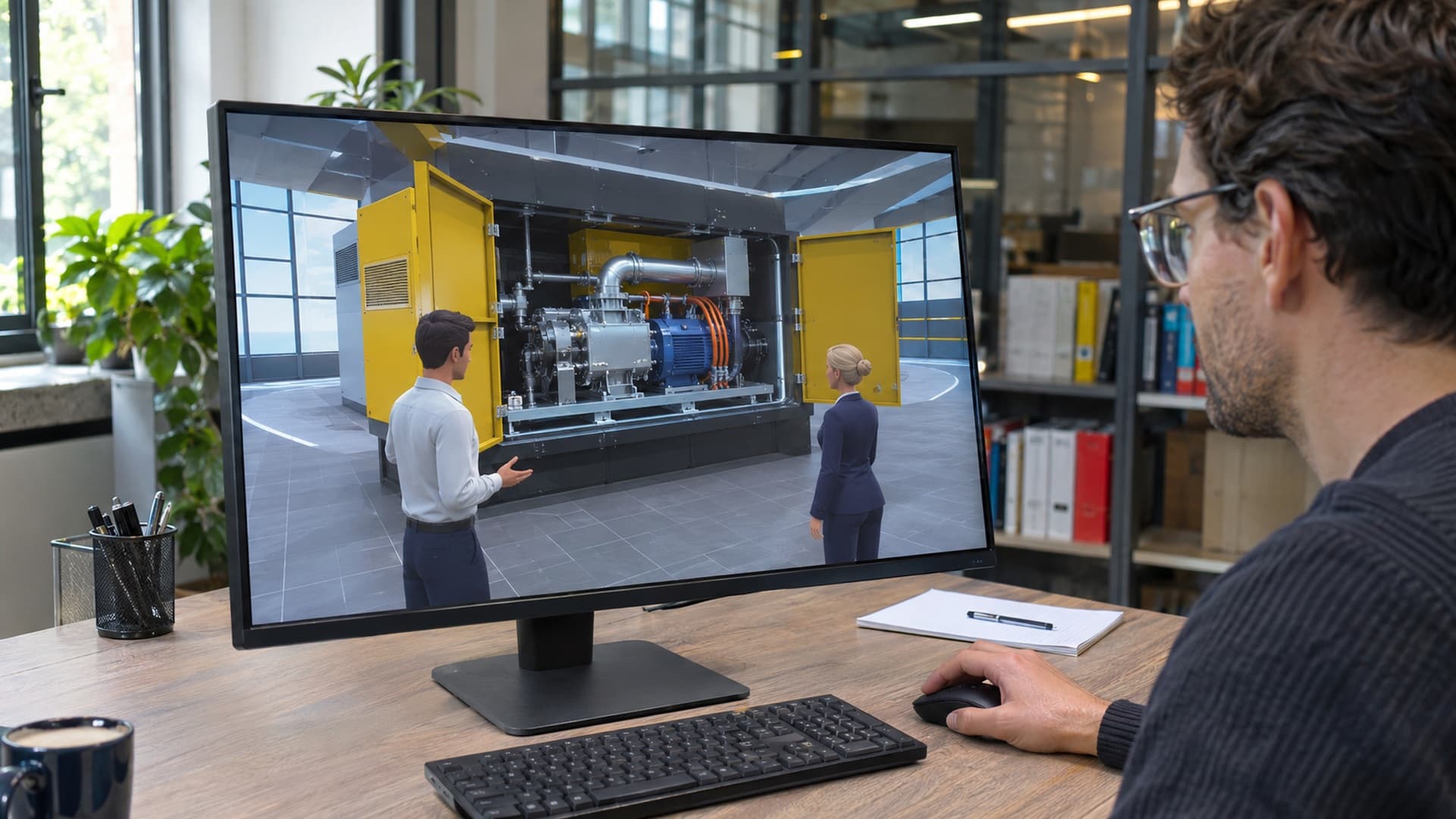
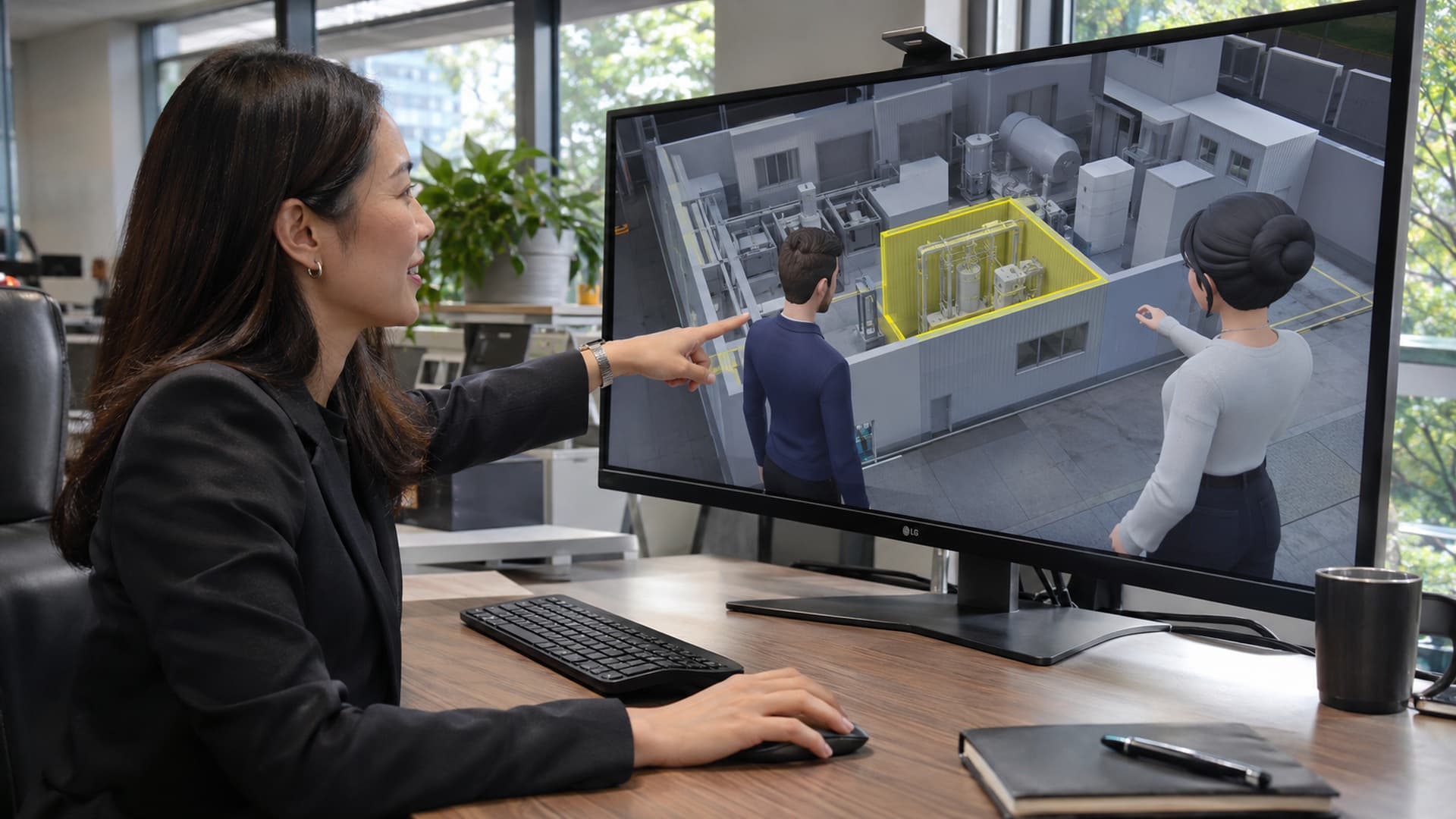
A future virtual space has a better chance of earning a place in a business workflow when it makes a specific task easier to understand or perform. A design team might need to discuss a spatial model with colleagues in another city. A sales team might need to explain a large product that cannot be transported to a customer's office. An educator might want a group to explore a simulated environment together.
Each example requires a different measure of value. For collaboration, the question may be whether participants identify and resolve issues more clearly. For sales, it may be whether the model supports a useful conversation and an appropriate next step. For learning, it may be whether a participant understands a defined concept or completes a task. These are proposed evaluations, not claims of guaranteed improvement.
A shared space should be compared with existing options. A video call with a screen share may be sufficient for a document review. A physical demonstration may be preferable when touch, exact dimensions or on-site assessment are central. A virtual environment earns its complexity when shared presence, spatial relationships or interactive objects make a meaningful difference.
Access across devices will shape adoption
A business audience rarely owns the same device. Some participants may use a desktop computer, some a mobile phone and some a headset. Supporting more than one access route can broaden participation, but it creates design work. Controls, screen size, performance and accessibility differ across devices, so a successful headset interaction may need a different presentation on a phone.
The W3C WebXR Device API is part of ongoing work to support XR experiences through the web. It does not imply universal browser or device support. Before selecting a web route, test the target combinations and provide a conventional fallback where necessary. A link that is easy to distribute is only useful if the intended users can open and navigate the experience.
For South African organisations, consider the audience's devices, connection reliability and the cost of downloading substantial 3D content. Test on realistic network conditions rather than only on a fast office connection. Where practical, offer a lightweight mode, staged loading or a non-immersive alternative. The right approach depends on the application and should be tested with actual participants.
Hardware management also matters. Shared devices require charging, cleaning, updates and support. Public events need onboarding and a way to help someone leave the experience. A future in which virtual participation feels routine will depend as much on these ordinary operating details as on improvements in displays or graphics.
Interoperability is a spectrum, not a switch
The idea of moving freely between virtual worlds is appealing, but interoperability has several layers. A 3D model may be portable in a supported format, while its interactive behaviour is not. An account may work across applications operated by one provider but not across unrelated platforms. A digital object may be technically exportable while its licence restricts reuse.
The glTF 2.0 specification describes a format for transmitting 3D assets across compatible tools and runtimes. It is useful for asset exchange, but it does not by itself transfer an entire world, identity system or multiplayer experience. Similarly, OpenXR provides an interface for XR applications and runtimes; device-specific features and testing still matter.
A practical procurement question is therefore: what must be portable, and to where? A business might prioritise editable product models, a list of registered users, the text and media used in an event, or the ability to rebuild a key interaction. Ask suppliers to demonstrate the relevant export and import path and explain what would need to be recreated.
Retain source files, licences, documentation and administrative access where contractually appropriate. Establish who owns changes and whether third-party components can be transferred. Interoperability is not only a technical feature. It also depends on commercial agreements, governance and the continued availability of the destination platform.

Trust and identity will become design requirements
A shared virtual environment needs a way to distinguish participants and decide what each person may do. A small internal workshop may use existing organisational accounts. A public exhibition may need simple registration, guest access and a method for reporting disruptive behaviour. A customer showroom may need a facilitator to control which information is visible.
Avatars can make presence understandable without requiring a photorealistic likeness. The appropriate level of representation depends on the purpose and the participant's preferences. Offer sensible choices where possible and avoid implying that a realistic avatar is essential for a useful conversation. A clear name, role and communication channel may be more valuable than visual detail.
Identity design should also address account recovery, impersonation, moderation and departure. Who can remove a disruptive participant? Can a guest enter a private room? What happens to an employee's access when they leave an organisation? These questions are familiar from other digital systems but become especially visible in shared, real-time spaces.
Trust is built through predictable behaviour. Explain when a session is recorded, who can enter, how participants can ask for help and what information remains after they leave. Avoid collecting more personal information than the service needs. Seek appropriate advice on South African data protection obligations and review the responsibilities of each platform provider.
Spatial data raises new questions
Immersive devices and applications can involve cameras, microphones, movement information and details about a user's surroundings. The precise data collected depends on the hardware, software and enabled features. Organisations should not assume that all data is stored or processed in the same way, and participants should not have to guess.
Map the data flow before deployment. Identify what is captured, what is transmitted, who can access it, where it is stored and when it is deleted. Consider whether bystanders or confidential material may appear in a camera view. If a session is recorded for training or support, explain the purpose and establish appropriate access controls.
A privacy review should include third-party analytics, communication services and hosting, not only the main application. Consider whether the same business outcome can be achieved with less data. For a product demonstration, an anonymous session may be sufficient until a customer chooses to make an enquiry. For an internal training activity, the organisation may need to retain an assessment result but not a recording of every movement.
The ICO's immersive technology research provides useful general context about privacy risks, but South African organisations must assess their own circumstances under applicable local law. Privacy practices should be revisited as features, suppliers and the intended audience change.
Digital economies will remain optional
Virtual currencies, digital assets and transactions are often presented as essential ingredients of a metaverse. Many useful business applications do not need them. A training scenario, collaborative design review or virtual conference can operate with ordinary access controls and no asset marketplace.
Where a transaction does serve the user, the organisation must consider payment, security, consumer expectations and support. What exactly is the customer purchasing? Can the item be used elsewhere? What happens if the platform closes? Who handles a disputed payment? Answers should be understandable before the user commits.
Ownership also requires precision. A business may own the rights to a product model, hold a licence to use an environment and rely on a platform's account system. Those are different relationships. Review contracts for reuse, modification, export and termination, and keep a record of third-party assets used in the experience.
The most resilient strategy is to separate the value of the experience from assumptions about speculative demand. A useful showroom should help explain products even if its visitors never buy a digital collectible. A training environment should support learning even if no virtual currency is involved.
AI may change content and interaction, with oversight
AI tools may help teams create drafts of 3D content, assist with navigation or support conversations inside virtual environments. Their usefulness depends on quality, rights, performance and the consequences of an incorrect response. A generated model might accelerate early concept work but still require review for technical accuracy and suitability for real-time use.
An AI assistant in a virtual showroom could help a visitor find information, but a business should define which sources it can use, how answers are checked and when a person takes over. An assistant should not invent a product specification or promise availability. For sensitive decisions, provide a clear route to an authorised human and maintain control over approved information.
AI-generated content also needs a maintenance process. If the source catalogue changes, the experience must not continue presenting outdated information as current. Test common and difficult questions, monitor failures and provide a way to correct them. These considerations apply whether the interface is spatial or conventional.
The future may include more responsive environments, but responsiveness is only valuable if users understand what is happening and can trust the result. Businesses should treat AI as a component to evaluate, not as a substitute for product ownership, verification or accessibility.
A practical roadmap for experimentation
Begin with a problem that involves a real audience and an identifiable decision. Choose an existing workflow to compare against and identify the role a virtual environment might play. Limit the first prototype to one valuable interaction, such as discussing a shared model or navigating a small event area with another participant.
Recruit representative users and test the full journey: invitation, entry, orientation, task, assistance and exit. Include staff who will operate or support the experience. Observe not only whether the technology works, but whether people understand the purpose and can complete the task with reasonable effort. Record barriers involving devices, network conditions, accessibility and privacy.
Agree beforehand what evidence will justify the next step. A pilot might assess successful entry, completion of a specific activity, the quality of participant feedback and the operational cost per session. Interpret metrics in context. A long session can reflect engagement or confusion; a large registration count says little about whether participants could join.
If the pilot is promising, plan a controlled expansion. Identify content owners, support arrangements, moderation, performance requirements and a budget for updates. If it is not promising, use the findings to refine the problem or choose a simpler medium. Stopping an unsuitable concept after a focused test can be a successful outcome.
Build for change rather than a single prediction
No organisation needs to predict the final shape of the metaverse to make a sensible decision today. It can choose a useful problem, document its requirements, retain rights to important assets and test whether participants benefit from a shared spatial experience. Those practices remain valuable even if platforms and devices change.
For businesses exploring a virtual showroom, event or collaboration space, Realities' metaverse development service provides a starting point for discussion. Contact the team with the audience, intended activity and constraints so the next step can be scoped around a measurable outcome.