In the rapidly evolving landscape of technology, Virtual Reality (VR) has emerged as a frontier that's not just about gaming but also about redefining how businesses interact with digital environments. As we dive into the intricacies of creating professional-grade VR games and applications, it's essential to understand the blend of creativity, technical prowess, and cutting-edge tools that make these immersive experiences possible. This article aims to demystify the process of VR software development, offering insights into the necessary applications, software development programs, developer skills, and the role of platforms like Unity and Unreal Engine.
The Foundation of VR Development
At its core, VR software development is about creating interactive 3D environments that users can explore and interact with in a way that mimics real-life or imagines the impossible. This requires a solid foundation in both software engineering and game design principles. Developers need to have a keen understanding of spatial design, user interface (UI) and user experience (UX) design, 3D modeling, and animation. Additionally, proficiency in programming languages such as C# (for Unity) or C++ (for Unreal Engine) is indispensable.
Essential Development Tools and Platforms
Unity
Unity is a powerhouse in the realm of game development, cherished for its versatility and user-friendly interface. It stands out as a preferred choice for VR development due to its robust support for VR platforms, including Oculus Rift, HTC Vive, and Sony PlayStation VR. Unity offers a comprehensive set of tools for creating detailed 3D environments, scripting game logic, and integrating audio and visual assets. Its asset store also provides developers with access to thousands of ready-made models, textures, and tools to expedite the development process.
Unreal Engine
Unreal Engine, developed by Epic Games, is renowned for its high-fidelity graphics and real-time rendering capabilities. It’s an ideal choice for projects that demand photorealistic visuals and dynamic lighting effects. Unreal Engine uses a visual scripting system called Blueprints, which allows developers to create complex game logic without writing a line of code, making it accessible to designers and artists as well. However, for custom functionality, knowledge of C++ is crucial.

Developer Skills and Expertise
Creating a VR application that stands out requires a multidisciplinary team with a diverse set of skills:
Programming: Developers must be adept in C# or C++, depending on whether they choose Unity or Unreal Engine. Understanding of VR SDKs (Software Development Kits) is also essential to integrate VR hardware functionalities.
3D Modeling and Animation: Artists skilled in creating lifelike or imaginative 3D assets and animations bring the virtual world to life.
UI/UX Design: Designers must innovate to create intuitive interfaces and engaging experiences that are unique to VR’s immersive nature.
Audio Engineering: Immersive audio is pivotal in VR, requiring sound engineers to craft spatial audio that enhances the sense of presence in the virtual environment.
Applications in Business
VR’s application in business transcends entertainment, opening avenues in training and simulation, architectural visualization, medical education, and retail, among others. For instance, VR can simulate high-risk job environments for safe and effective training or provide immersive walkthroughs of architectural designs before physical construction begins.
The Development Process
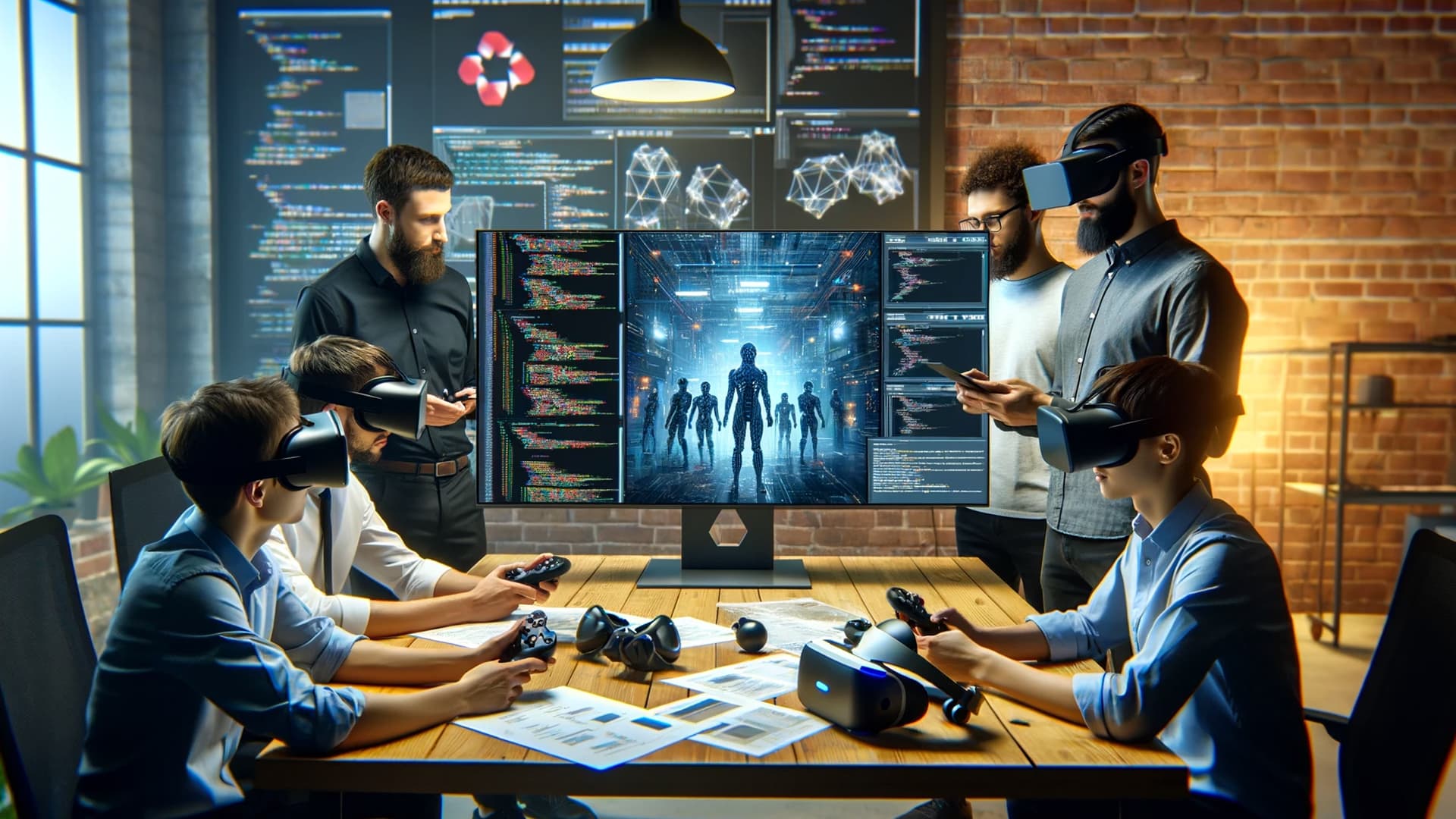
Developing a VR application involves several stages, starting with conceptualization, where the idea is fleshed out into a viable project plan. This is followed by design, focusing on the user experience and visual style of the application. Development comes next, where programmers, artists, and designers collaborate to build the environment, script interactions, and integrate assets. Testing is an ongoing process, essential for optimizing performance and ensuring the application runs smoothly on target VR hardware. Finally, deployment marks the launch of the application, followed by maintenance to address any post-launch issues and updates.

Challenges and Considerations
VR development is not without its challenges. Ensuring user comfort to prevent motion sickness, optimizing performance for high frame rates, and creating intuitive interaction mechanisms are critical considerations. Additionally, the field is rapidly evolving, requiring developers to stay abreast of the latest technologies and best practices.
The journey to creating a professional VR game or application is a blend of art, technology, and vision. With platforms like Unity and Unreal Engine, developers have powerful tools at their disposal to bring immersive virtual experiences to life. However, the success of a VR project hinges not just on the technology used but on a deep understanding of human interaction with virtual environments. As businesses explore the potential of VR, the demand for skilled developers and creative minds will continue to grow, paving the way for innovative applications that push the boundaries of what’s possible in virtual realities.
As we look to the future, the possibilities of VR in transforming business operations, education, healthcare, and entertainment are limitless. By harnessing the right tools, skills, and creativity, developers can create experiences that not only captivate users but also drive forward the potential of virtual spaces in the professional realm.
This guide serves as a starting point for those embarking on the journey of VR software development. Whether you’re aiming to revolutionize training simulations, create immersive educational content, or develop the next blockbuster VR game, the path is paved with opportunities to innovate and inspire. Welcome to the world of virtual reality software development, where the only limit is your imagination.